Views: 0 Author: Site Editor Publish Time: 2026-09-16 Origin: Site


Quick Answer Desulfurization catalysts, such as Ru/Pd Benzene and ZnO variants, rely on specific chemical compositions and operating parameters to achieve optimal sulfur removal in industrial processing. Standard high-purity ZnO catalysts typically feature a zinc oxide content above 92%, operate most effectively between 200–400ºC, and can handle inlet H2S levels up to 500 ppmv. This article outlines the verified technical specifications, absorption capacities, and operating conditions for these catalysts to help technical evaluators and procurement managers assess material suitability for their specific facility environments.
Key Takeaways
Ru/Pd Benzene catalysts utilize 1.0% Pd and 1.0% Pt to maintain high selectivity at elevated conversion rates.
High-purity ZnO catalysts (>92% ZnO) achieve a maximum sulfur absorption capacity of 33.0 wt% at 400ºC under well-designed conditions.
Optimal operating temperatures for standard ZnO desulfurization range from 200ºC to 400ºC.
Evaluating inlet H2S limits (up to 500 ppmv) is critical for matching catalyst specifications to facility requirements.
To understand how these catalysts achieve optimal sulfur removal, technical evaluators must first examine their baseline chemical formulations. The physical and chemical makeup of a Desulfurization Catalyst dictates its reactivity, its thermal stability, and its ultimate lifespan within a reactor. Procurement managers and facility engineers cannot select a catalyst based on volume alone; they must evaluate the precise active ingredients that drive the desulfurization process. Henan Kingway Technology Co., Ltd. supplies specific formulations, including Ru/Pd Benzene and high-purity ZnO variants, each engineered with distinct chemical profiles to address different processing requirements.
For processes involving benzene desulfurization, the introduction of precious metals is a critical specification. The Ru/Pd Benzene desulphurisation catalyst supplied by the company contains a highly specific active metal loading: 1.0% Palladium (Pd) and 1.0% Platinum (Pt).
For a technical evaluator, this exact percentage is a vital procurement metric. Precious metals like Palladium and Platinum act as the primary active sites for the catalytic reaction. The 1.0% loading is calibrated to provide sufficient active surface area to drive the reaction forward without incurring the prohibitive costs associated with over-loading precious metals. The most important feature of this specific catalyst formulation is the high selectivity it obtains even at higher conversions.
In industrial chemistry, selectivity refers to the catalyst's ability to direct the chemical reaction toward the desired product—in this case, the removal of sulfur—without triggering unwanted side reactions that could degrade the benzene or produce undesirable byproducts. Achieving high selectivity is relatively straightforward at low conversion rates, but maintaining that selectivity when the process is pushed to higher conversion rates requires the precise catalytic stability that the 1.0% Pd and 1.0% Pt formulation provides. Buyers evaluating this specification must weigh their facility's need for high conversion throughput against the necessity of maintaining product purity, making this specific precious metal loading a critical factor in the procurement decision.
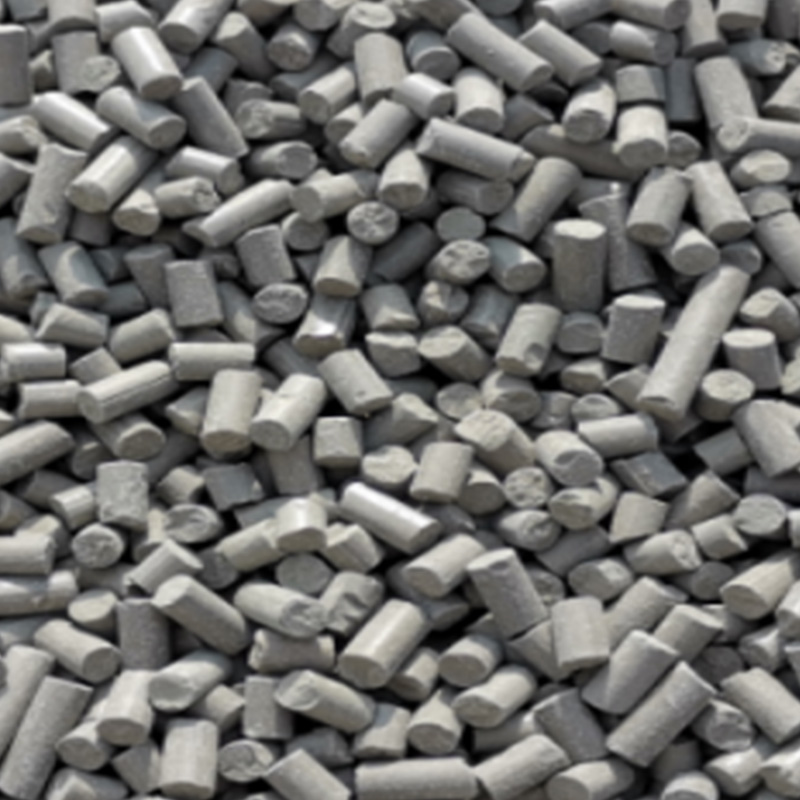
When evaluating zinc oxide-based solutions, the purity of the active material is the foundational metric for performance. The TY-1/TYHZ-1 ZnO Desulfurizing Catalyst features a zinc oxide (ZnO) content that is strictly above 92%.
This high-purity specification is critical for facility engineers calculating reactor volume and expected lifespan. In a ZnO desulfurization process, the zinc oxide reacts directly with hydrogen sulfide (H2S) to form zinc sulfide (ZnS) and water. Because this is a chemical consumption process rather than a purely catalytic one, the total amount of available zinc oxide directly determines how much sulfur the bed can capture before it becomes saturated and requires replacement.
A specification of above 92% ZnO ensures that the vast majority of the catalyst pellet consists of active, reactive material, minimizing the presence of inert binders or fillers that take up valuable space within the reactor. For procurement teams, this high active content translates to a denser reactive bed, allowing for longer operational cycles between change-outs, provided the environmental conditions within the reactor are properly maintained.
Because chemical composition dictates thermal stability and reactivity, these specific formulations require precisely calibrated environmental conditions to function without premature degradation. A high-purity catalyst will only reach its maximum potential if the facility's operating parameters align with the material's engineered tolerances. Evaluating these environmental requirements is the most critical step in preventing rapid catalyst saturation or thermal failure.
Temperature is the primary driver of reaction kinetics in desulfurization. For the specified TY-1/TYHZ-1 ZnO catalyst, the optimal temperature operating range is strictly defined as 200ºC to 400ºC.
Operating within this specific thermal window is non-negotiable for achieving the stated performance metrics. At the lower end of this spectrum (200ºC), the catalyst receives sufficient activation energy to initiate the reaction with hydrogen sulfide. This lower threshold is often utilized by facilities that need to minimize energy consumption or protect downstream equipment from excessive heat. However, reaction rates at 200ºC are naturally slower than at higher temperatures, meaning the facility must account for longer contact times within the reactor bed to achieve the desired level of sulfur removal.
As the operational temperature approaches the upper limit of 400ºC, the reaction kinetics accelerate significantly. The zinc oxide becomes highly reactive, allowing for rapid and efficient capture of sulfur compounds. Facility engineers must carefully design their heating and control systems to maintain this temperature without exceeding the 400ºC ceiling, as pushing beyond the optimal range can lead to structural degradation of the catalyst pellet, loss of surface area, or unintended side reactions that compromise the entire desulfurization process.
Beyond temperature, the concentration of incoming sulfur dictates the viability of the catalyst for a specific facility. The specified ZnO catalyst can handle inlet H2S levels up to 500 ppmv (parts per million by volume).
This 500 ppmv threshold is a critical boundary condition for procurement. If a facility's feed gas consistently exceeds 500 ppmv of H2S, this specific catalyst cannot be used as a primary, standalone solution without risking immediate surface saturation and breakthrough. Facilities with higher baseline sulfur loads must implement upstream bulk removal processes, utilizing this ZnO catalyst as a secondary or polishing step to capture the remaining H2S and bring the final product within acceptable purity limits.
When the inlet H2S is maintained below the 500 ppmv limit, and the reactor is operated at the optimal upper temperature threshold, the catalyst achieves its peak performance. Under typical, well-designed operating conditions, the maximum sulfur absorption capacity for this ZnO catalyst is 33.0 wt% at 400ºC.
Important limitations for sulfur absorption capacity:
The 33.0 wt% capacity is a maximum ceiling, not a guaranteed baseline for all environments.
This maximum capacity is only achievable at the 400ºC optimal temperature peak.
The metric assumes typical, well-designed operating conditions, meaning flow rates, pressure, and gas distribution must be perfectly calibrated to prevent channeling or uneven bed saturation.
For a technical evaluator, a 33.0 wt% absorption capacity means the catalyst can absorb sulfur up to roughly one-third of its own weight before the bed is fully exhausted. This metric is the primary variable used to calculate the required volume of catalyst to purchase and the expected time between maintenance shutdowns, directly impacting the facility's operational budget and downtime scheduling.
Once a facility aligns its operational environment with these strict temperature and saturation parameters, securing the materials through a verified, globally capable supplier becomes the primary procurement objective. Technical specifications are only valuable if the supply chain can consistently deliver materials that meet those exact baselines without deviation.
KINGWAY operates as an established supplier of these specific chemical formulations. Founded in 2001, the company has over two decades of operational history in the chemical supply sector. For procurement managers evaluating vendor stability, longevity in the market serves as a baseline indicator of reliable sourcing networks and consistent operational practices.
The company's logistical footprint is another critical factor for global facilities. KINGWAY has established stable and long-term cooperative business relationships with customers from more than 30 countries and regions. This export capability demonstrates an ability to navigate international shipping regulations, manage cross-border logistics, and deliver sensitive chemical materials to diverse global markets without degrading the product during transit.
Furthermore, the company obtained ISO9001:2000 Certification in 2006. While this represents a historical iteration of the quality management standard, it provides technical evaluators with documented evidence of the company's long-standing commitment to structured quality control and standardized operational procedures. When sourcing materials for critical Catalyst Oil And Gas applications, verifying these historical compliance benchmarks helps procurement teams mitigate supply chain risk and ensure that the delivered Ru/Pd and ZnO catalysts will consistently match the required 1.0% precious metal loadings and >92% purity specifications required for optimal facility performance.
While supplier verification secures the supply chain, technical evaluators often have specific, lingering questions regarding the exact mechanics of catalyst deployment.
Temperature directly dictates the reaction kinetics and the depth of sulfur penetration into the catalyst pellet. For the specified ZnO catalyst, operating at the upper optimal limit of 400ºC maximizes the reaction efficiency, allowing the material to achieve its maximum sulfur absorption capacity of 33.0 wt%. Operating at lower temperatures within the 200-400ºC range will still facilitate desulfurization but may result in a lower total weight percentage of absorbed sulfur before breakthrough occurs.
In the specified Ru/Pd Benzene catalyst, the 1.0% Pd and 1.0% Pt loading provides the necessary active sites for the catalytic reaction. These precious metals are engineered to maintain high selectivity, meaning they efficiently drive the sulfur removal process without causing unwanted side reactions or degrading the primary benzene product, even when the facility pushes the system to higher overall conversion rates.
Facilities must measure their baseline feed gas H2S concentrations against the catalyst's maximum handling threshold. The specified ZnO catalyst is designed to handle inlet H2S levels up to 500 ppmv. If a facility's gas stream exceeds this limit, they must either install upstream bulk sulfur removal equipment or select a different primary catalyst, as exposing the ZnO bed to concentrations above 500 ppmv will cause premature saturation and rapid loss of desulfurization efficiency.
To ensure your facility's operating parameters align with these material capabilities, review the complete technical specification checklist and selection guide for Ru/Pd and ZnO desulfurization catalysts.


