Views: 0 Author: Site Editor Publish Time: 2026-09-20 Origin: Site


Effective industrial reforming relies on the strategic pairing and precise loading of a primary and secondary reforming catalyst system to optimize gas conversion and protect equipment. Primary catalysts initiate the conversion of gaseous hydrocarbons into syngas, while secondary catalysts complete the auto-thermal reforming process. Typically composed of nickel on an alumina support, these catalysts are loaded in specific upper and lower sections of reformer tubes to manage thermal stress. This article explains how these systems function within chemical fertilizer, methanol, and hydrogen production facilities.
Key Takeaways:
Material Composition: Primary and secondary steam-reforming catalysts typically utilize nickel as the active ingredient and alumina as the structural support to withstand extreme furnace temperatures.
Primary Loading Strategies: To optimize the endothermic reaction, specific primary catalysts (such as Z111-6YQ) are loaded in the upper section of the reformer tube, while others (like CN-16YQ) are placed in the lower section.
Secondary Protection: In secondary reformers, upper-section catalysts (like Z205) act as a physical and thermal barrier to protect the lower-section catalysts from high temperatures and air scour.
Industrial Use Cases: These combined catalyst systems are deployed globally to drive large-scale gas conversion in chemical fertilizer, methanol, and hydrogen production plants.
To understand how specific catalysts function, it is necessary to establish the baseline chemical principles of the industrial steam-reforming process. Steam reforming is the standard industrial method for producing synthesis gas (syngas)—a crucial mixture of hydrogen and carbon monoxide—from gaseous hydrocarbons like methane.
This chemical conversion is highly endothermic, meaning it requires a continuous and substantial input of external heat to drive the reaction forward. In a typical industrial setup, hydrocarbon feedstock is mixed with steam and passed through externally heated tubes inside a primary reformer furnace. Because the molecular bonds in hydrocarbons are highly stable, the reaction requires extreme temperatures to proceed at a commercially viable rate.
Without intervention, simply applying heat is inefficient and can lead to unwanted side reactions, such as the formation of solid carbon (coking), which fouls equipment and halts production. Catalysts are introduced into this environment to lower the activation energy required for the reaction. By providing a specialized surface where the hydrocarbon and steam molecules can interact more readily, the catalyst ensures that the conversion to syngas occurs efficiently, predictably, and at lower temperatures than would otherwise be necessary. The success of this initial conversion stage dictates the efficiency of the entire downstream chemical plant.
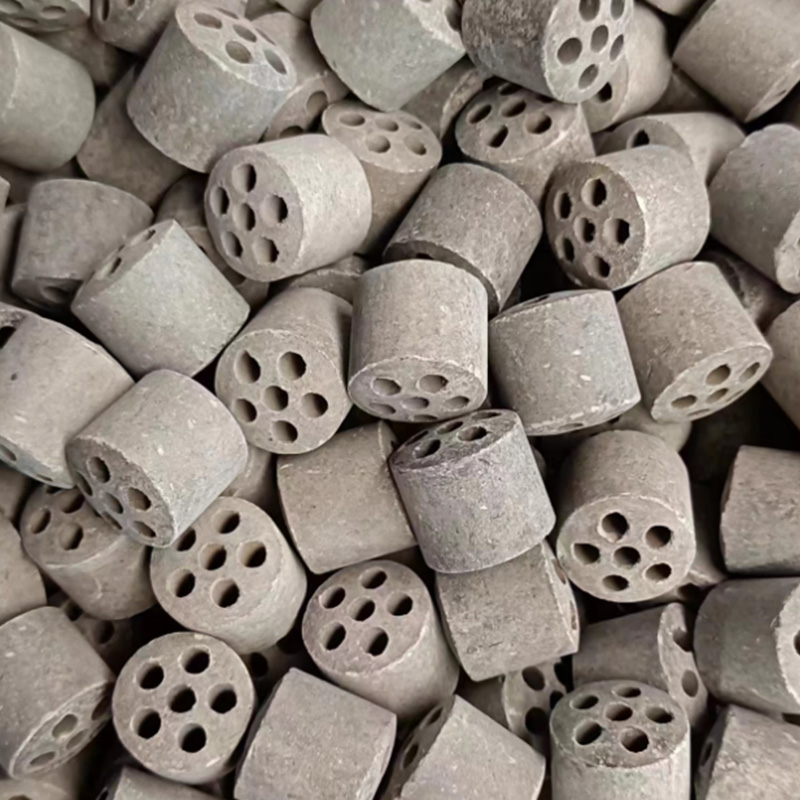
Because the steam-reforming process involves severe temperature gradients and shifting gas compositions as the mixture travels through the furnace, a single uniform catalyst is rarely optimal. Henan Kingway Technology Co., Ltd. supplies a Primary Secondary Reforming Catalyst system specifically engineered to address the distinct physical and chemical demands of different zones within the primary reformer tube.
The industry standard for these primary catalysts relies on a specific material pairing: nickel and alumina. Kingway’s Z111-6YQ and CN-16YQ are primary steam-reforming catalysts that utilize nickel as the active ingredient and alumina as the support structure. Nickel is selected for its high catalytic activity in breaking carbon-hydrogen bonds, while the alumina support provides the necessary mechanical strength and thermal stability to prevent the nickel from degrading under extreme furnace heat.
To maximize efficiency and catalyst lifespan, plant operators utilize a strategic loading method that divides the reformer tube into distinct sections.
Upper Section Loading: The catalyst Z111-6YQ is typically loaded in the upper section of the primary reformer tube. This zone experiences the initial impact of the feedstock and steam mixture, requiring a catalyst formulation optimized for the onset of the endothermic reaction and the specific thermal dynamics at the tube inlet.
Lower Section Loading: Conversely, CN-16YQ is loaded in the lower section of the tube. As the gas mixture descends, the temperature increases and the chemical composition shifts (containing more hydrogen and carbon monoxide, and less unreacted methane). The lower-section catalyst is formulated to drive the remaining hydrocarbon conversion to its maximum thermodynamic limit before the gas exits the primary reformer.
Primary reforming is highly effective, but it is thermodynamically constrained; it cannot convert 100% of the hydrocarbon feedstock without requiring impractically high furnace temperatures. To process the residual methane exiting the primary reformer, the gas is transferred to a secondary reformer. This dependency necessitates a different class of catalysts capable of handling auto-thermal reforming.
In the secondary reformer, air or pure oxygen is injected into the gas stream. This triggers a partial combustion of the unreacted methane, an exothermic (heat-releasing) reaction that rapidly spikes the internal temperature. This internally generated heat is then used to drive the final, endothermic reforming of the remaining hydrocarbons. Kingway supplies Z205 and CN-20 as secondary steam-reforming catalysts to facilitate this exact process.
The introduction of oxygen creates an exceptionally harsh environment at the top of the secondary reformer, characterized by severe thermal shock and high-velocity gas flow (air scour). To manage this, secondary catalysts are also loaded strategically. Z205 is specifically loaded in the upper section of the secondary reformer. Its primary function in this position is to act as a robust physical and thermal barrier. By absorbing the brunt of the high temperatures and resisting the abrasive force of the air scour, the upper-loaded Z205 protects the CN-20 catalyst located in the lower section, allowing the lower bed to efficiently complete the final syngas conversion without being physically degraded by the initial combustion zone.
The mechanical and chemical mechanisms of primary and secondary reforming catalysts are put into practice across the heavy chemical sector. The syngas generated by these catalyst systems serves as the foundational building block for several critical global commodities.
Kingway supplies primary and secondary reforming catalysts directly to chemical fertilizer, methanol, and hydrogen production plants. In chemical fertilizer production, the syngas is further processed to isolate hydrogen, which is then reacted with nitrogen to synthesize ammonia. Ammonia is the primary precursor for nearly all commercial nitrogen fertilizers. Similarly, in methanol plants, the precise ratio of hydrogen to carbon monoxide generated by the reforming catalysts is catalytically synthesized into liquid methanol, a vital industrial solvent and fuel precursor.
The reliability of the catalyst loading strategy directly impacts the uptime and yield of these massive facilities. Demonstrating the scale of these industrial applications, Kingway's primary and secondary reforming catalysts have been used in over 60 sets of ammonia and methanol plants. By utilizing the specific upper and lower loading configurations for both the primary (Z111-6YQ / CN-16YQ) and secondary (Z205 / CN-20) stages, these facilities can maintain continuous, high-volume gas conversion while minimizing the frequency of maintenance shutdowns required for catalyst replacement. For facilities looking to optimize their broader chemical processes, these reforming systems are often evaluated alongside a wider portfolio of Catalyst Oil And Gas solutions.
While strategic loading and robust material composition enhance efficiency, industrial reforming catalysts operate under extreme stress and are subject to strict operational boundaries.
Important limitation: Catalyst performance and operational lifespan are not absolute; they are highly dependent on the specific operating conditions of the plant. Facility operators must actively manage several variables to prevent premature catalyst failure:
Thermal Sintering: Prolonged exposure to temperatures exceeding the catalyst's design limits can cause the active nickel particles to fuse together (sintering), reducing the available surface area and dropping conversion efficiency.
Feedstock Poisoning: The presence of impurities in the hydrocarbon gas, particularly sulfur or heavy metals, can permanently deactivate the nickel sites.
Steam-to-Carbon Ratios: Failing to maintain the correct ratio of steam to hydrocarbon can lead to carbon deposition (coking), which physically blocks the catalyst pores and restricts gas flow.
Because industrial facilities rely on predictable catalyst behavior to maintain safety and production quotas, standardized manufacturing quality is a critical procurement requirement. Establishing a baseline for consistent production, Kingway obtained ISO9001:2000 certification in 2006, ensuring that the physical and chemical properties of their reforming catalysts meet documented quality management standards before deployment in high-stress industrial environments.
Primary reforming catalysts are divided into upper and lower sections to manage the changing thermal dynamics and gas compositions as the feedstock travels through the tube. For example, Z111-6YQ is loaded in the upper section to handle the initial reaction onset, while CN-16YQ is loaded in the lower section to maximize final conversion as temperatures increase.
Industrial primary steam-reforming catalysts typically use nickel as the active catalytic ingredient and alumina as the structural support. Nickel provides the necessary chemical activity to break hydrocarbon bonds, while alumina offers the thermal stability required to survive furnace temperatures.
In secondary auto-thermal reforming, the introduction of air or oxygen creates intense heat and gas velocity at the top of the vessel. Catalysts like Z205 are loaded in the upper section specifically for their high-temperature and air-scour resistance, absorbing this physical and thermal stress to protect the primary conversion catalysts located in the lower section.
These combined primary and secondary catalyst systems are primarily utilized in large-scale chemical fertilizer (ammonia), methanol, and hydrogen production plants, where they are essential for converting raw hydrocarbon gases into usable synthesis gas.
To determine the appropriate catalyst loading configuration for your facility's specific thermal and chemical requirements, review the technical specifications for Kingway's primary and secondary reforming catalysts or consult our engineering resources for detailed selection guidance.


